
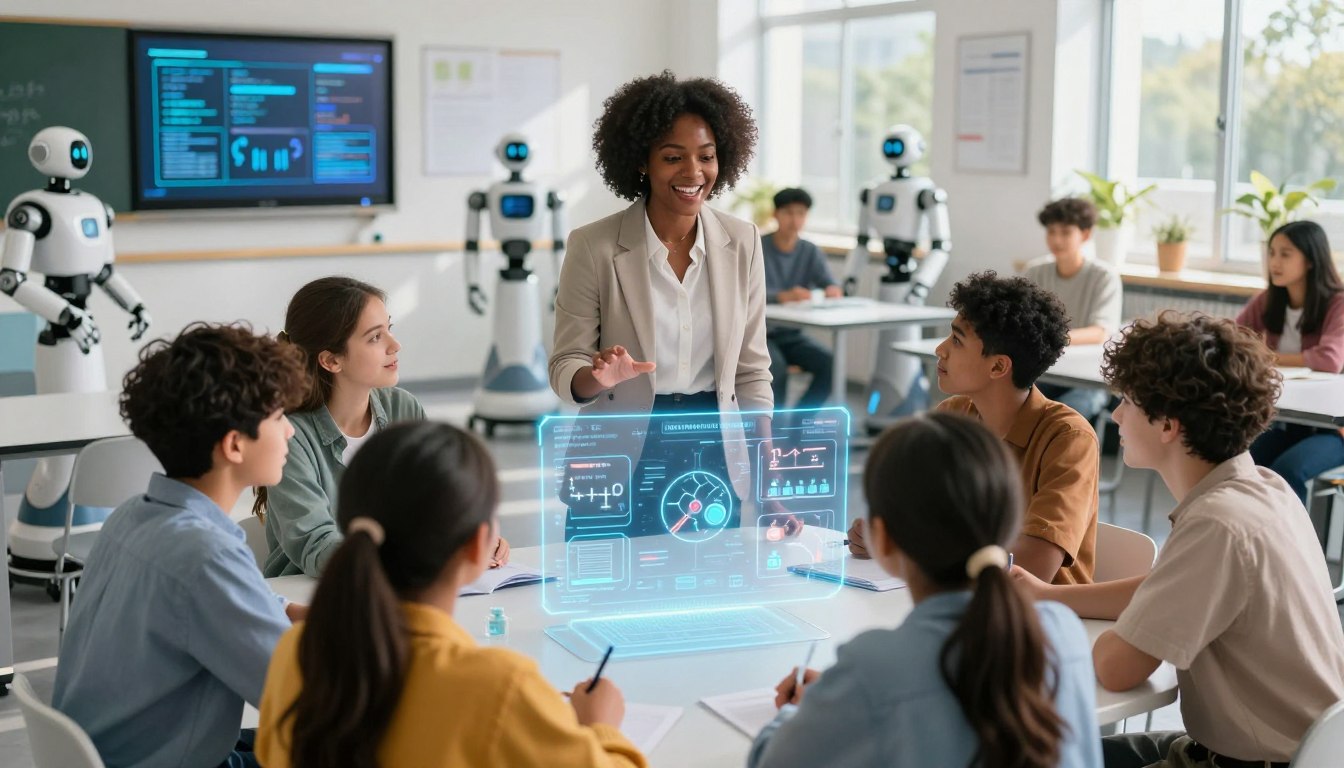
I am shocked that digital schooling might hit a value near $100 billion by 2028. It shows how much our local classrooms are shifting. My goal here is to explain how the rise of artificial intelligence (ai) in education changes lives. Most students now get personalized help through smart apps.
I feel that ai in educational institutions makes studying better for everyone. These tools help teachers focus on complex tasks. I will share a full guide about this tech world today.
Many Indian learners use high-tech platforms to study at home. I have seen kids solve tough math problems using software. Such machines learn from student habits. They provide unique paths for every child. This process keeps them excited. I find this change very powerful.
Teachers also get extra support from these gadgets. It helps them track progress without much stress. My article looks at these trends. I want to show how schools transform.
Key Takeaways
- Personalized learning paths are becoming standard for most students.
- Smart tools help teachers manage busy classrooms with ease.
- India sees a major shift toward digital literacy across schools.
- Adaptive software improves student engagement levels significantly.
- Data-driven insights help track academic performance in real time.
- Automated systems reduce administrative burdens for teaching staff.
Understanding What AI Means for Modern Education
In the modern educational landscape, AI is emerging as a key player, and understanding its nuances is crucial for harnessing its potential. As we delve into the world of AI in education, it’s essential to comprehend its implications and applications.
Defining Artificial Intelligence in the Educational Context
Artificial Intelligence in education refers to the use of AI technologies to improve learning outcomes, enhance teaching methods, and streamline administrative tasks. AI technology in schools can manifest in various forms, such as intelligent tutoring systems, automated grading, and personalized learning platforms.
AI-powered tools can analyze vast amounts of data to provide insights into student performance, helping educators tailor their teaching strategies to meet individual needs. By integrating AI in the classroom, educators can create a more inclusive and effective learning environment.
Why I Believe AI Matters for Indian Educational Institutions
Indian educational institutions are at a crossroads, facing challenges such as outdated curricula, inadequate infrastructure, and a shortage of quality educators. AI can help bridge these gaps by providing personalized learning experiences, automating administrative tasks, and enhancing student engagement.
- AI can help identify knowledge gaps and suggest customized learning paths.
- It can facilitate access to quality educational resources, even in remote areas.
- AI-powered tools can assist educators in developing more effective teaching methodologies.
By embracing AI, Indian educational institutions can improve learning outcomes and better prepare students for a rapidly changing world.
The Current State of Technology in Schools Across India
While there has been significant progress in adopting technology in Indian schools, there is still a long way to go. Many schools lack the infrastructure and resources needed to effectively integrate AI in the classroom.
However, there are initiatives underway to address these challenges, such as government programs aimed at improving digital literacy and investing in educational technology.
- Some schools are already leveraging AI-powered tools to enhance learning.
- Ed-tech startups are developing innovative solutions tailored to the Indian context.
- Collaborations between educational institutions and tech companies are on the rise.
As these efforts continue to gain momentum, we can expect to see significant improvements in the adoption and utilization of AI in Indian schools.
The Rise of Artificial Intelligence (AI) in Education: A Historical Perspective
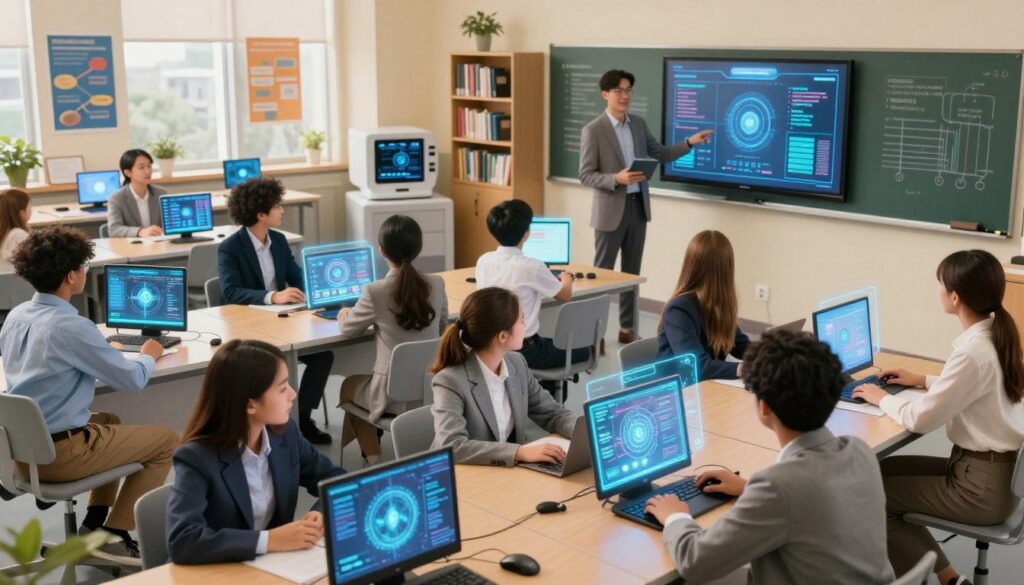
As we explore the historical context of AI in education, it becomes evident that its rise has been both fascinating and transformative. The journey of AI from its inception to its current state in educational settings is a story worth telling.
Early Adoption of AI Technology in Schools Worldwide
The early adoption of AI in schools worldwide marked the beginning of a new era in education. Initially, AI was introduced through simple automated systems that gradually evolved into more sophisticated tools. Intelligent tutoring systems were among the first AI applications in education, designed to provide personalized learning experiences.
The use of AI in education started gaining momentum in the late 20th century. Countries with advanced technological infrastructure were the first to integrate AI into their educational systems. This early adoption was characterized by experimental projects and pilot programs aimed at assessing the potential of AI in enhancing learning outcomes.
Key Milestones That Shaped AI-Powered Learning
Several key milestones have shaped the trajectory of AI-powered learning. One significant development was the creation of adaptive learning platforms, which adjust the difficulty of course materials based on individual student performance. Another milestone was the introduction of AI-powered virtual teaching assistants, capable of supporting teachers with tasks such as grading and providing feedback.
The evolution of AI in education has been marked by continuous innovation. The development of more advanced algorithms and the availability of large datasets have enabled AI systems to become increasingly sophisticated.
How Global Trends Are Influencing Indian Education Systems
Global trends in AI adoption are significantly influencing Indian education systems. The Indian government has launched initiatives aimed at integrating AI into school curricula, recognizing its potential to improve educational outcomes. AI for Everyone, an initiative by the Ministry of Electronics and Information Technology, is one such program that aims to introduce AI concepts to students at various levels.
The influence of global trends is also seen in the growing adoption of AI-powered educational tools by Indian schools. These tools are being used to enhance teaching and learning, making education more accessible and effective.
The Acceleration of AI Adoption Post-Pandemic
The COVID-19 pandemic has accelerated the adoption of AI in education worldwide, including in India. The necessity for remote learning solutions led to a surge in demand for AI-powered educational platforms. Online learning platforms that utilize AI to offer personalized learning experiences saw significant growth during this period.
| Year | Pre-Pandemic AI Adoption Rate | Post-Pandemic AI Adoption Rate |
|---|---|---|
| 2020 | 20% | 50% |
| 2021 | 25% | 60% |
| 2022 | 30% | 70% |
Essential AI Applications in Education You Need to Know
As we explore the vast potential of AI in education, it’s crucial to understand the specific applications that are transforming the learning landscape.
Intelligent Tutoring Systems and Personalized Learning Platforms
Intelligent tutoring systems (ITS) and personalized learning platforms are revolutionizing the way students learn by providing tailored educational experiences.
Adaptive Learning Software
Adaptive learning software adjusts the difficulty level of course materials based on individual student performance, ensuring that each student is challenged appropriately.
Key benefits include:
- Improved student engagement
- Enhanced understanding of complex concepts
- Better retention rates
Real-Time Student Performance Analysis
Real-time analysis enables educators to identify areas where students are struggling, allowing for timely interventions.
This proactive approach helps in addressing knowledge gaps before they become significant issues.
Automated Grading and Assessment Tools
Automated grading and assessment tools are streamlining the evaluation process, freeing up instructors to focus on teaching.
Essay Evaluation Systems
Essay evaluation systems use AI to assess written assignments, providing feedback on grammar, syntax, and content.
This not only saves time but also ensures consistency in grading.
Multiple-Choice and Objective Testing
AI-powered tools can efficiently grade multiple-choice and objective tests, reducing the administrative burden on educators.
Benefits include:
- Reduced grading time
- Minimized errors in grading
- Immediate feedback to students
AI-Powered Content Creation and Curriculum Design
AI is being used to create customized educational content and design curricula that meet the needs of individual students.
Dynamic Content Generation
Dynamic content generation involves using AI to create educational materials that can be adapted to different learning styles.
This approach ensures that content remains relevant and engaging.
Learning Path Customization
AI helps in customizing the learning path for each student, ensuring that they follow a trajectory that is tailored to their needs and abilities.
Virtual Teaching Assistants and Educational Chatbots
Virtual teaching assistants and educational chatbots are providing support to students around the clock.
24/7 Student Support Systems
These systems offer assistance with coursework, answer questions, and provide guidance, ensuring that students have access to help whenever they need it.
This around-the-clock support enhances the learning experience and improves student satisfaction.
Language Learning Companions
Language learning companions use AI to help students practice and improve their language skills in an interactive and engaging way.
Advantages include:
- Personalized language learning
- Interactive practice sessions
- Real-time feedback
How to Identify AI Opportunities in Your Educational Institution
As we explore the potential of AI in education, it’s essential to identify areas where AI can be effectively integrated into Indian educational institutions. I believe that understanding the current state of technology in schools is crucial in determining the future of AI in education.
To start, institutions can assess their existing infrastructure and identify gaps where AI can bridge the divide. For instance, AI-powered tools can enhance the learning experience by providing personalized learning platforms and automating administrative tasks.
The impact of AI on teaching and learning is significant, and institutions must consider how AI can support their educational goals. By leveraging AI in educational institutions, educators can create a more efficient and effective learning environment.
As AI continues to evolve, it’s crucial for educational institutions to stay ahead of the curve and explore the possibilities that AI has to offer. By doing so, they can unlock new opportunities and create a brighter future for students.
FAQ
How do I define the rise of artificial intelligence (ai) in education for my institution?
To me, the rise of artificial intelligence (ai) in education represents a fundamental shift from “one-size-fits-all” instruction to data-driven, personalized experiences. I view it as the integration of advanced machine learning algorithms into the daily workflow of ai in educational institutions, where software like DreamBox Learning or Century Tech helps bridge the gap between student needs and faculty resources.
What makes ai technology in schools particularly relevant for the Indian education system right now?
In my experience, the sheer scale of the Indian student population makes ai technology in schools a necessity rather than a luxury. I believe that platforms like BYJU’S and Embibe are proving that AI can provide high-quality, individualized attention to millions of students simultaneously, addressing the teacher-to-student ratio challenges that I often see in traditional settings.
What are the most impactful ai applications in education that I should prioritize?
If I were to rank them, I would say Intelligent Tutoring Systems (ITS) and automated grading tools are the most transformative. By using ai applications in education like Gradescope or Duolingo, I have seen educators reclaim hundreds of hours previously spent on administrative tasks, allowing them to focus on deeper student mentorship.
What are the primary benefits of ai in learning for students struggling with traditional curriculum?
One of the greatest benefits of ai in learning is the ability to provide a “low-stakes” environment for failure. I’ve observed that when students use AI-powered companions like Khan Academy’s Khanmigo, they feel more comfortable asking “dumb” questions and receiving immediate, non-judgmental feedback that adapts to their specific pace of mastery.
How do I see the future of ai in education evolving over the next decade?
I anticipate that the future of ai in education will move toward “Invisible AI,” where the technology is so deeply embedded in our learning management systems that we don’t even think of it as “tech.” I expect to see hyper-personalized career pathways where LinkedIn Learning style algorithms suggest specific skills and projects based on a student’s real-time performance throughout their academic life.
What has been the real-world impact of ai on teaching and learning post-pandemic?
The impact of ai on teaching and learning became undeniable during the global lockdowns. I saw a massive acceleration in the adoption of virtual assistants and proctoring tools like Proctorio. For me, this period proved that integrating ai in the classroom is essential for maintaining educational continuity and accessibility during times of crisis.
How can I begin identifying opportunities for integrating ai in the classroom effectively?
I suggest starting with a “pain-point audit” of your current curriculum. I look for areas where students consistently struggle or where teachers spend the most time on repetitive labor. By integrating ai in the classroom through targeted tools like Quizlet’s Q-Chat or Microsoft Education’s AI tools, you can address specific pedagogical gaps without overwhelming your existing infrastructure.
You can also learn it by taking the classes in Skillsapling